

In a state connected by winding roads and separated by long distances, a 1,250-mile journey helped ACSUM leaders strengthen relationships, hear members’ concerns, and build solidarity across Maine.
By Clara Perka, Vice President of ACSUM and Samantha Burdick, Communications Director at MEA
In July, union leaders Brian Berger and Clara Perka traveled nearly 1,250 miles over five days spread across two weeks to visit members at University of Maine System (UMS) campuses throughout the state. Along the way, they offered a small measure of relief from rising gas and grocery prices, while connecting with members and discussing key issues, including wages, working conditions, and ways to strengthen connections among members across Maine.
Berger serves as the president and Perka serves as the vice president and chief negotiator of the Associated COLT (Clerical, Office, Laboratory, and Technical) Staff of the Universities of Maine, known as ACSUM.
ACSUM members can be found in every corner of every campus. They are the backbone of academic departments and athletic programs, support admissions and registrar offices, help students access health and counseling services, troubleshoot classroom technology, coordinate events, and keep facilities operations running smoothly.
For Berger and Perka, the trip was about more than the miles traveled. It was an opportunity to build relationships, identify barriers to member engagement, and hear directly from staff about the issues affecting their workplaces. What they learned will help shape ACSUM’s organizing efforts and strengthen its voice at the bargaining table in the coming year.
→WHO IS ACSUM?
ACSUM members are hourly administrative and technical staff who support the day-to-day operations across the UMS. They answer students’ questions, process financial aid, support academic programs, maintain records, coordinate services, and perform countless other functions that make it possible for campuses to operate effectively. Some ACSUM members bring decades of institutional knowledge to their roles, while others are just beginning their careers, creating a workforce that blends experience with new perspectives.
Although students and faculty are often the visible face of Maine’s public colleges and universities, ACSUM members provide the essential services that support students and campus operations every day. At the same time, the bargaining unit has experienced a long-term decline, decreasing from approximately 600 employees in 2020 to about 465 today, a loss of more than one-fifth of the workforce.
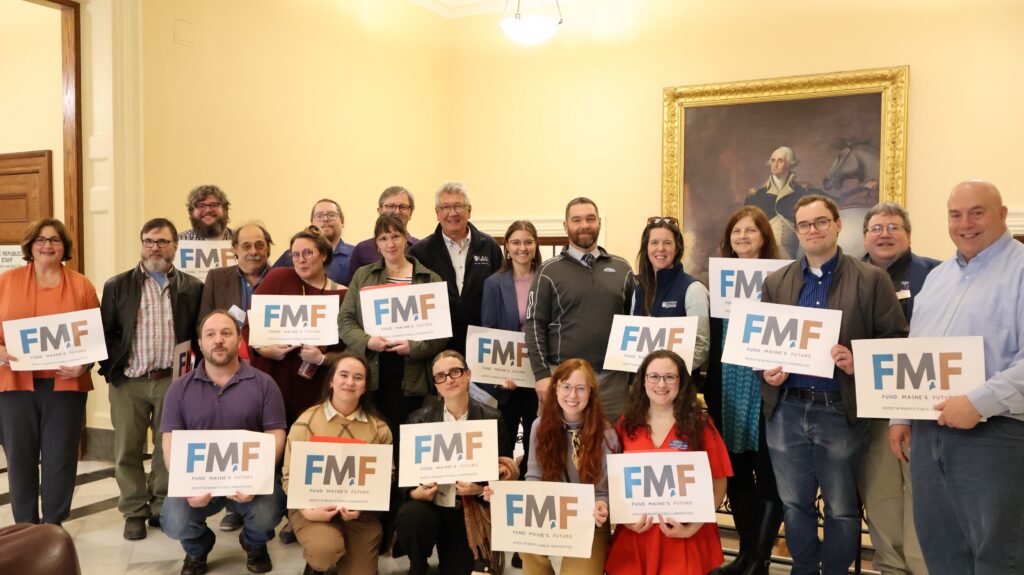
But shrinking numbers have not diminished ACSUM’s impact. As the bargaining unit has contracted, members have worked to build power through organizing, advocacy, and political action. In 2025, ACSUM was awarded MEA’s Anne Sheehan Political Action Award for the integral role their survey data played in the creation of the Fund Maine’s Future campaign that resulted in legislation LD 1219, sponsored by Senator Mike Tipping to increase state appropriations to the University of Maine System.
→CHALLENGES WITH ORGANIZING A STATEWIDE LOCAL
For ACSUM leaders, organizing a statewide local with members spread hundreds of miles apart can feel like a herculean task. Some campuses are home to a large share of ACSUM members, while others have fewer than 10 bargaining unit members on site. Yet despite the distance, Perka says members across the state share many of the same workplace challenges.
Geography is only one obstacle to staying connected. Many ACSUM members, like education support professionals in K-12 schools, have limited opportunities to participate in union activities during the workday. Others balance second jobs, caregiving responsibilities, or coursework as they use their tuition benefit to continue their education, making it difficult to attend meetings and events outside of work.
Perka understands those competing demands firsthand. In addition to her union organizing work, she is a single mom pursuing her doctorate in leadership. As a feminist scholar whose primary university role is supporting the Women, Gender, and Sexuality Studies Program at USM, Perka brings a human-centered approach to her work in the union. Central to that approach is a commitment to showing up, being visible, and building relationships. Visiting every campus in the UMS this summer alongside Berger was an embodiment of that commitment.
“Building relationships with our members is key to growing our power at the grassroots level. While ACSUM leadership prioritizes the dignity of our members at the bargaining table, our message on this road trip is that ACSUM needs its members to organize and build power,” says Perka.
→REBUILDING POWER, ONE CAMPUS, ONE MILE AT A TIME
Throughout their journey, Berger and Perka heard many of the same concerns regardless of campus size or location. Members described increasingly heavy workloads, with some taking on responsibilities once shared across multiple positions.
“As our bargaining unit has shrunk, many ACSUM members have been assigned additional work responsibilities, sometimes filling the role of two or more positions,” Perka said.
Those increased demands often leave little time to build connections with coworkers, participate in campus life, or engage with the union. Long-tenured staff said it can be difficult to connect with newer employees, reinforcing the importance of creating opportunities for members to build relationships across departments and campuses.
To address these barriers, ACSUM President Brian Berger reimagining local roles to make them accessible to more members and is working intentionally with the MEA to design training and professional development so members feel prepared, confident, and successful in these roles.
In many ways, Berger and Perka are rebuilding their local infrastructure, one campus, one mile at a time.
→RISING COSTS, SHARED STRUGGLES
The road trip was driven in part by what ACSUM leaders heard from members earlier this year. After surveying members about the impact of rising costs, ACSUM received responses from 62% of its membership, painting a stark picture of the financial pressures many university employees face.
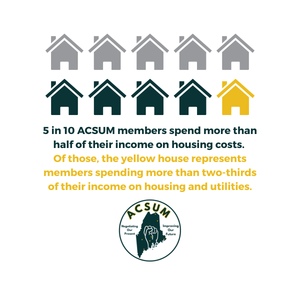
Fifty percent of survey respondents report spending 51% or more of their income on basic expenses like housing and utilities) with almost 12% spending more than 66%.
A majority of members reported living paycheck to paycheck and struggling to cover basic expenses, with many reporting they were unable to save for emergencies or the future. Others described relying more heavily on food pantries, postponing home and car repairs, delaying major life decisions such as starting a family, and forgoing medical care because of cost.
To help ease some of that burden, ACSUM leaders used the campus visits to deliver a small one-time benefit while also creating space for conversations about the realities members are facing.
“We found that more than half of members reported spending over 50% of their income on basic expenses such as housing and utilities,” Perka said. “Even more concerning, nearly 12% reported spending more than two-thirds of their income on those necessities alone.”
→EVERY MILE HAS A STORY
Every member has a story to tell, and with each mile, those stories became clearer. When Berger and Perka shared how they became involved with ACSUM, members shared their own experiences in return.
“Members we visited shared stories about their love for their communities, their students, and their colleagues,” Perka said. “But they also talked about challenges with supervisors and the struggle to stay in jobs they love but cannot afford to keep.”
Perka describes stories of solidarity and collective action. “We also heard examples of members standing up for one another, speaking out in meetings, and finding creative ways to make things work in a university system that asks us to do more with less every day.”
Those conversations reinforced the importance of the work ahead. As ACSUM prepares for the next round of bargaining, leaders are focused on building grassroots power across the state, strengthening local chapters, and helping members develop the advocacy and organizing skills needed to create change.
The road trip made one thing clear—ACSUM’s strength comes from its members. From the University of Southern Maine to the University of Maine at Fort Kent, from the University of Maine at Farmington to the University of Maine at Machias, and everywhere in between, members are building the relationships and collective power needed to fight for better wages, stronger working conditions, and the dignity and respect every UMS employee deserves.
→FIVE WAYS TO GET MORE INVOLVED WITH YOUR UNION TODAY:
- Identify the association representative (or building rep) at your worksite
- Talk to your colleagues about your union
- Introduce yourself to new staff members
- Learn about your contract, reach out to your association rep,
- Invite a colleague to join the union
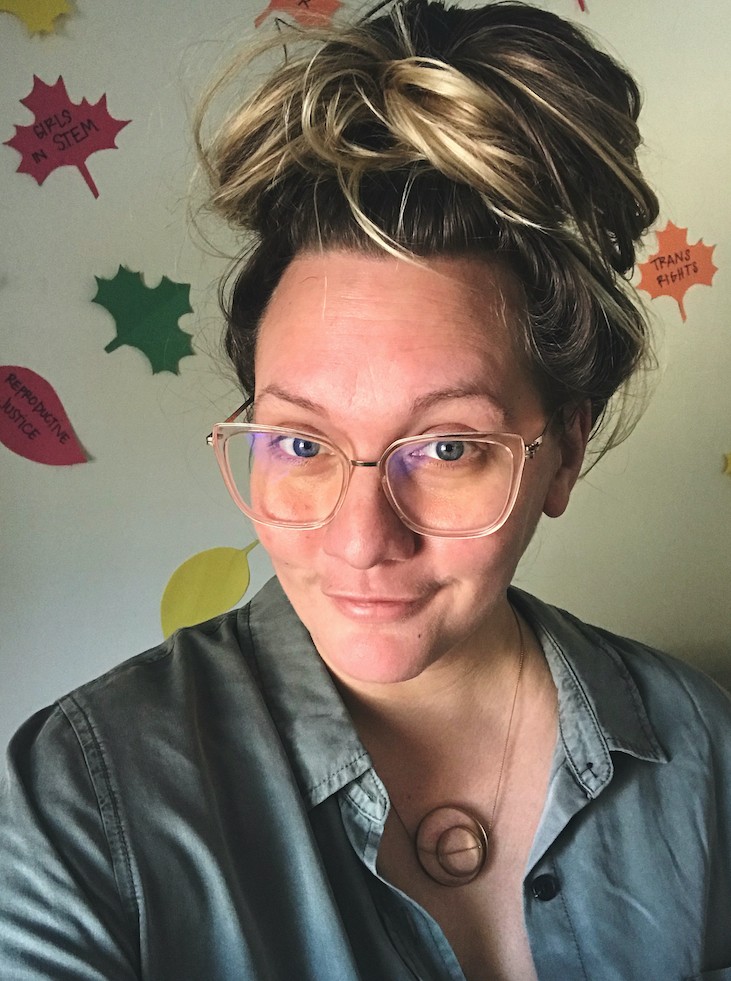
Clara Perka, M.A. is the Administrative Specialist for the Women, Gender, and Sexuality Studies Program at the University of Southern Maine and the vice-president of the Associated COLT Staff of the Universities of Maine. An alum of USM (’20, ’22), she is currently a doctoral student in the Leadership and Organizational Studies Program where her research focuses on feminist leadership identity and development at institutions of higher education. Clara lives in Kennebunk, with her son Harper, where she also serves as a School Board Director for RSU 21.