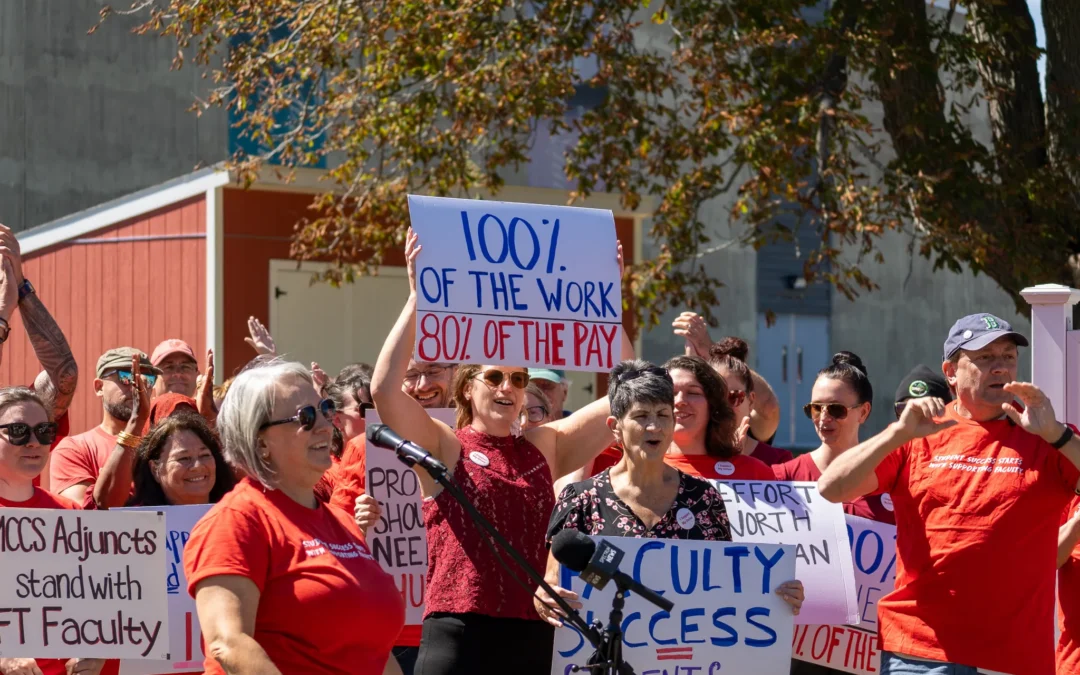
SMCC faculty say hands-on instruction deserves equal value, equal respect, and equal pay.
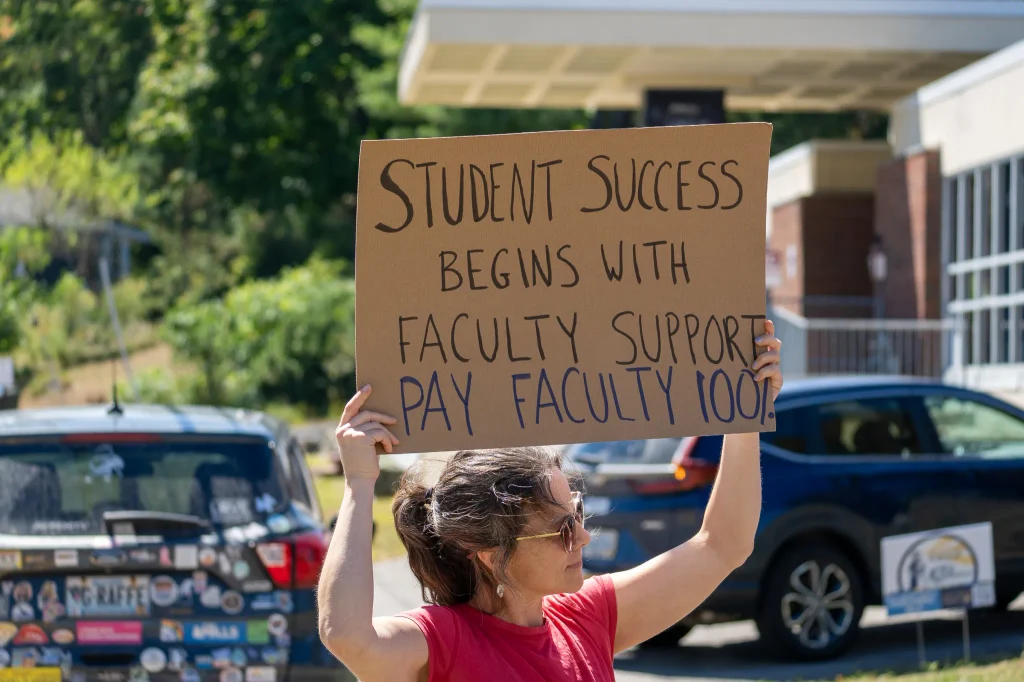
Holding a sign that read, “100% of the work for 80% pay,” Elizabeth Chenard joined dozens of colleagues from Southern Maine Community College (SMCC) on the first day of classes to raise awareness about unequal pay for hands-on instruction.
Chenard, a nursing faculty member at SMCC and member of the Community College Faculty Association (CCFA), said hands-on learning plays a critical role in student success.
“I am a true believer in hands-on learning. Many students learn best through hands-on experiences, especially in the trades,” Chenard said. “That is some of the most crucial learning that happens for our students alongside professionals in these settings.”
100% of the work, 80% of the Pay
Across the Maine Community College System, faculty teaching lab, shop, and clinical courses are compensated differently depending on where they teach. At SMCC, faculty receive only 80% of their credit-hour pay for teaching those courses, despite spending the same amount of time teaching students.
After labor-management negotiations failed to resolve the issue over the past year, CCFA members at SMCC organized an informational picket to call for equal pay for equal work. Chris Teret, president of the SMCC chapter of CCFA, said the college is sending the message that hands-on learning is worth less.
“Whether we’re teaching in a classroom, a lab, a shop, or a clinical setting, all teaching and learning should be valued equally,” Teret said.

“As we move into negotiations this fall, this is the kind of solidarity and action we need to be treated fairly.”
– Juliette Guilmette, CCFA President
Faculty members say the issue comes down to how teaching is valued. They argue that compensating hands-on instruction at a lower rate sends the message that learning in labs, shops, and clinical settings is worth less, even though it requires the same expertise, preparation, and student support as classroom instruction. Every hour spent teaching students, they say, deserves equal compensation.
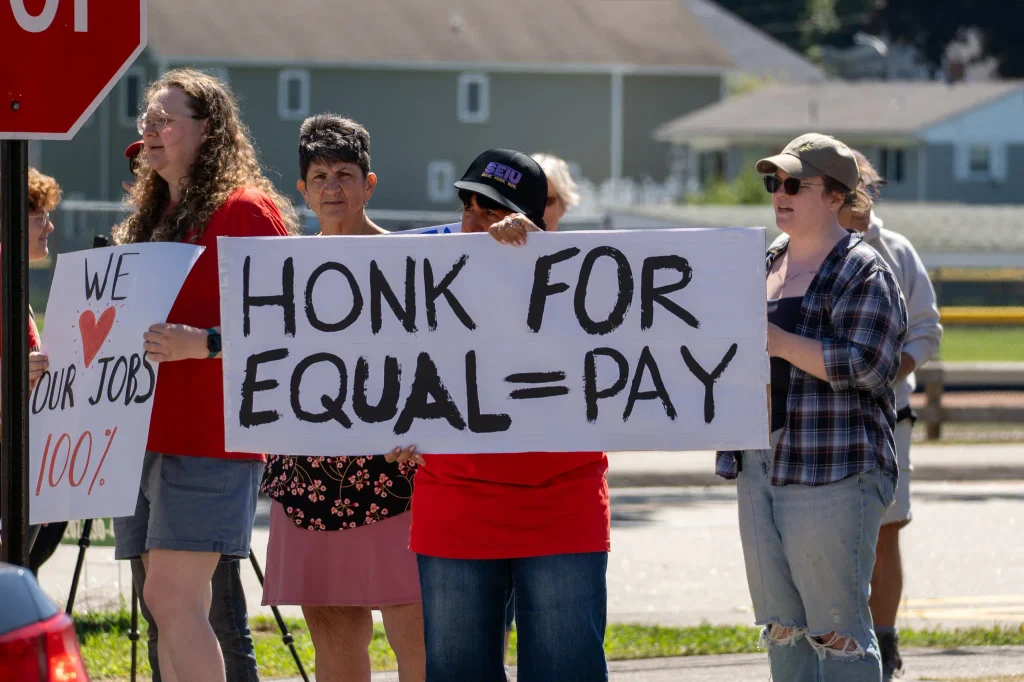
STANDING IN SOLIDARITY
Their call for equal value and equal pay drew support from far beyond the SMCC campus. CCFA members from community colleges across Maine joined the picket line alongside members of the faculty association, labor leaders, and elected officials.
The issue resonates beyond SMCC. According to the National Education Association, Maine community college faculty rank 33rd in the nation for pay, while wage growth continues to lag behind inflation. Faculty leaders say many instructors, particularly those teaching in trades and other hands-on programs, could earn significantly more working in their fields.
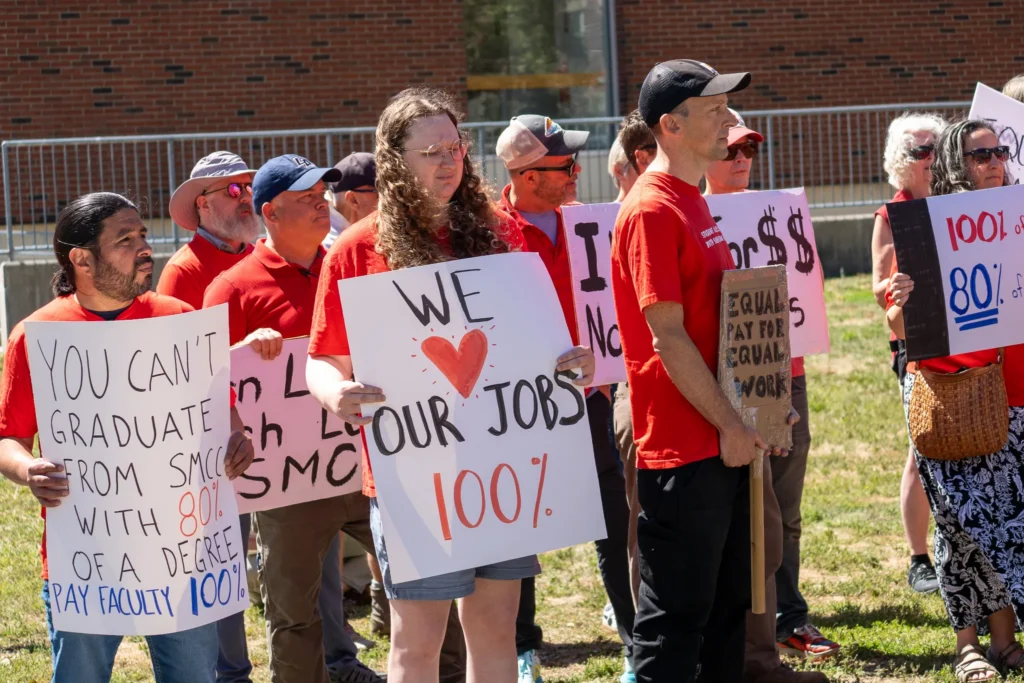
Juliette Guilmette, president of the statewide CCFA and a faculty member at Kennebec Valley Community College (KVCC), says those challenges are part of a broader conversation taking place across the community college system as faculty prepare for contract negotiations this fall.
“As we move into negotiations this fall, this is the kind of solidarity and action we need to be treated fairly,” Guilmette said.